CO₂-verdier i henhold til EU trinn V
EU trinn V utslippsforskrifter – hva du trenger å vite
Nye miljøstandarder for ikke-veggående mobile maskiner
Innføringen av EU-forskrift 2016/1628 og dens endring 2020/1040 har betydelig transformert bransjen ved å håndheve strengere trinn V utslippsstandarder for ikke-veggående mobile maskiner (NRMM). Disse forskriftene har som mål å redusere luftforurensning ved å sette nye grenser for partikkelutslipp (PM), nitrogenoksider (NOx), hydrokarboner (HC) og karbonmonoksid (CO) for forbrenningsmotorer.
Hos AS-Motor er vi forpliktet til å levere høyytelses slåmaskinløsninger som oppfyller de nyeste miljø- og regulatoriske kravene. Fra og med 1. januar 2022 må alle nyinnførte maskiner være trinn V-kompatible, noe som sikrer reduserte utslipp og forbedret bærekraft for profesjonelle og kommunale brukere.
Forståelse av trinn V-overholdelsestidslinjen
Overgangen til trinn V-motorer har vært en fasevis prosess som påvirker forskjellige motor-kategorier på ulike stadier:
- Fra 1. januar 2019: Nye motor-typegodkjenninger krevde trinn V-overholdelse.
- Fra 2020 og utover: Mange motor-kategorier kunne ikke lenger selges med mindre de oppfylte trinn V-standarder.
- Frem til 31. desember 2021: Maskiner med før-trinn V-motorer kunne fortsatt plasseres på markedet.
- Fra 1. januar 2022: Kun trinn V-kompatible motorer kan installeres i nye maskiner solgt innenfor EU.
Denne overgangsperioden tillot produsenter, forhandlere og sluttbrukere å fase ut ikke-kompatibelt lager samtidig som de adopterte renere, mer avanserte motorteknologier.
CO₂-utslippsverdier – transparens for kunder
CO₂-verdiene ble ikke bestemt i de tidligere gyldige eksosgassmålingene og kan derfor ikke angis. Du kan finne ut CO₂-verdiene til trinn V-motorer via motorens typegodkjenningsnummer og listene til de respektive motorprodusentene lenket her. Du vil finne typegodkjenningsnummeret på motoren til enheten.
For å finne CO₂-verdiene til en spesifikk trinn V-motor:
- Finn typegodkjenningsnummeret på motoretiketten.
- Se produsentens publiserte trinn V CO₂-utslippsliste.
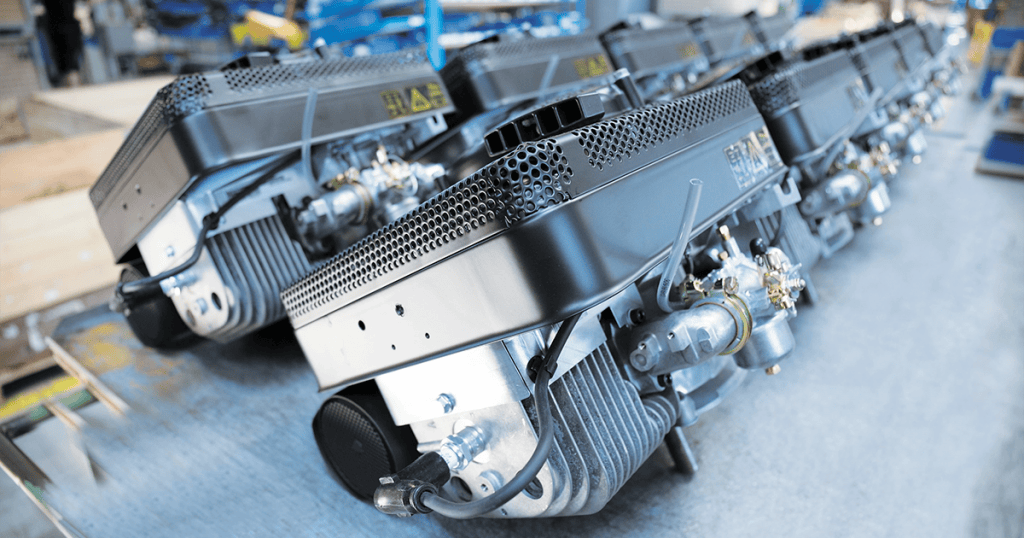
For eksempel er AS-Motor 2-taktsmotor (165cc) blant de få to-taktsmotorene sertifisert under trinn V, som demonstrerer innovativ ingeniørkunst som oppfyller moderne utslippsstandarder. AS-Motor gir også tilgang til Briggs & Stratton, Honda og Kawasaki motor CO₂-data via deres offisielle dokumentasjon.
Briggs & Stratton motorer | Honda motorer | Kawasaki motorer
AS-Motor trinn V motor CO₂-verdier
AS-Motor 2-taktsmotor
- Familienavn på utslippsetiketten: AS 165 GC
- Typegodkjenningsnummer: e12016/16282016/1628SHB3/P012901
- CO₂-verdi (g/kW-h): 1110.45
XP140 Motor (AS 30 WeedHex 140)
- Familienavn på utslippsetiketten: 5X65MU
- Typegodkjenningsnummer: e92016/16282017/656SYA1/P102400
- CO₂-verdi (g/kWh): 854.37
XP200 Motor (AS 585 KM)
- Familienavn på utslippsetiketten: XP225A
- Typegodkjenningsnummer: e92016/16282017/656SYA1/P102100
- CO₂-verdi (g/kWh): 828.09
Trinn V-forskrifter krever også at produsenter publiserer CO₂-utslippsverdier for hver sertifisert motor. Disse verdiene måles under laboratorieforhold ved bruk av standardiserte test-sykler, noe som sikrer transparens for kjøpere. Imidlertid kan virkelige utslipp variere basert på driftsforhold, vedlikehold og belastningsfaktorer.
Fortsatt bruk av eldre motorer
Mens alle nye maskiner må overholde trinn V-forskrifter, kan motorer som ble plassert på markedet før 31. desember 2021 fortsette å selges og brukes på ubestemt tid. Denne regelen tillater bedrifter å fortsette å operere eksisterende utstyr samtidig som de går over til nyere, lavere utslipps-teknologier. Imidlertid må alle nye maskiner introdusert på EU-markedet oppfylle trinn V-standarder.
AS-Motors forpliktelse til bærekraft og overholdelse
Hos AS-Motor anerkjenner vi viktigheten av å oppfylle miljøforskrifter samtidig som vi fortsetter å levere høy-gress slåmaskinytelse som profesjonelle stoler på. Vårt utstyr er designet for å overholde trinn V-standarder, noe som sikrer reduserte utslipp uten å kompromisse med kraft, effektivitet eller pålitelighet.